Garage Door Won't Open in the Cold? Why Springs and Openers Fail in Winter
Quick Answer: When a garage door won't open in the cold, the usual reasons are metal parts contracting and binding, grease and lubricant hardening into drag, a spring that has snapped in the freezing temperature, the bottom seal frozen to the ground, or a weak opener battery. Cold makes every one of these worse at once. A few causes are safe to check yourself, but anything involving the springs or cables is under extreme tension and is not a do-it-yourself job.
It is barely light out, the thermometer reads well below freezing, and you press the remote expecting the door to roll up like it always does. Instead the opener strains, the door shudders an inch, and then nothing. Or you hear a flat, heavy thud from the motor and the door does not move at all. You are standing in the cold with a car you cannot get to, wondering what just went wrong overnight when everything worked fine the day before.
If you live anywhere around Door County, you already know what a hard freeze and lake-effect snow can do to anything mechanical left out in it. A garage door is a moving system of steel, springs, rollers, rubber, and electronics, and cold weather works against every one of those parts at the same time. The good news is that the reasons behind a stuck winter door are well understood. Some of them you can safely sort out in a few minutes. Others are a signal to step back and stop trying, because forcing the issue can turn a repair into an injury. Here is what is actually happening and how to tell the difference.
Why Cold Weather Turns a Reliable Door Into a Stubborn One
A garage door does not fail in winter because of one dramatic problem. It fails because several small changes stack up until the door can no longer do its job.
Metal contracts and parts bind
Steel shrinks slightly as temperatures drop. Tracks, rollers, hinges, springs, and cables all pull tighter. On a door already out of alignment, that small contraction is enough to bind it.
Grease and lubricant harden
Rollers, hinges, and tracks depend on lubricant to move smoothly. When old or wrong grease gets cold, it turns thick and gummy, dragging. The opener reads that drag as resistance.
The door is simply heavier to move
Everything above makes the door harder to lift. A system with plenty of margin in July now asks the opener and springs to work near their limit, when parts fail.
The Spring Problem: The One That Ends the Troubleshooting
Above or beside your door sits a spring system that carries almost the entire weight of the door. The opener does not do the heavy lifting; the springs do. When a spring lets go, the door becomes a heavy slab the opener cannot budge.
Cold is hard on springs for a specific reason
Metal becomes more brittle as it cools, so a spring near the end of its life is likelier to snap on a freezing morning than a mild afternoon. Most standard torsion springs are rated for roughly 10,000 cycles, about seven years of use. A door cycled often reaches that faster.
How to recognize a broken spring
The tells are consistent. You may have heard a loud bang from the garage the night before, like something heavy hitting the floor. The door feels heavy to lift by hand. The opener hums or strains while the door barely moves or runs crooked. A gap shows in the coil.
WARNING: Garage door springs and cables are under extreme tension, enough to cause serious injury if they release suddenly. If you suspect a broken spring, do not try to lift the door, disconnect the opener and force it, or work on the spring yourself. This is one of the few garage door repairs that should only ever be handled by a trained technician with the right tools. Leave the door down and stop operating it.
The Bottom Seal Frozen to the Ground
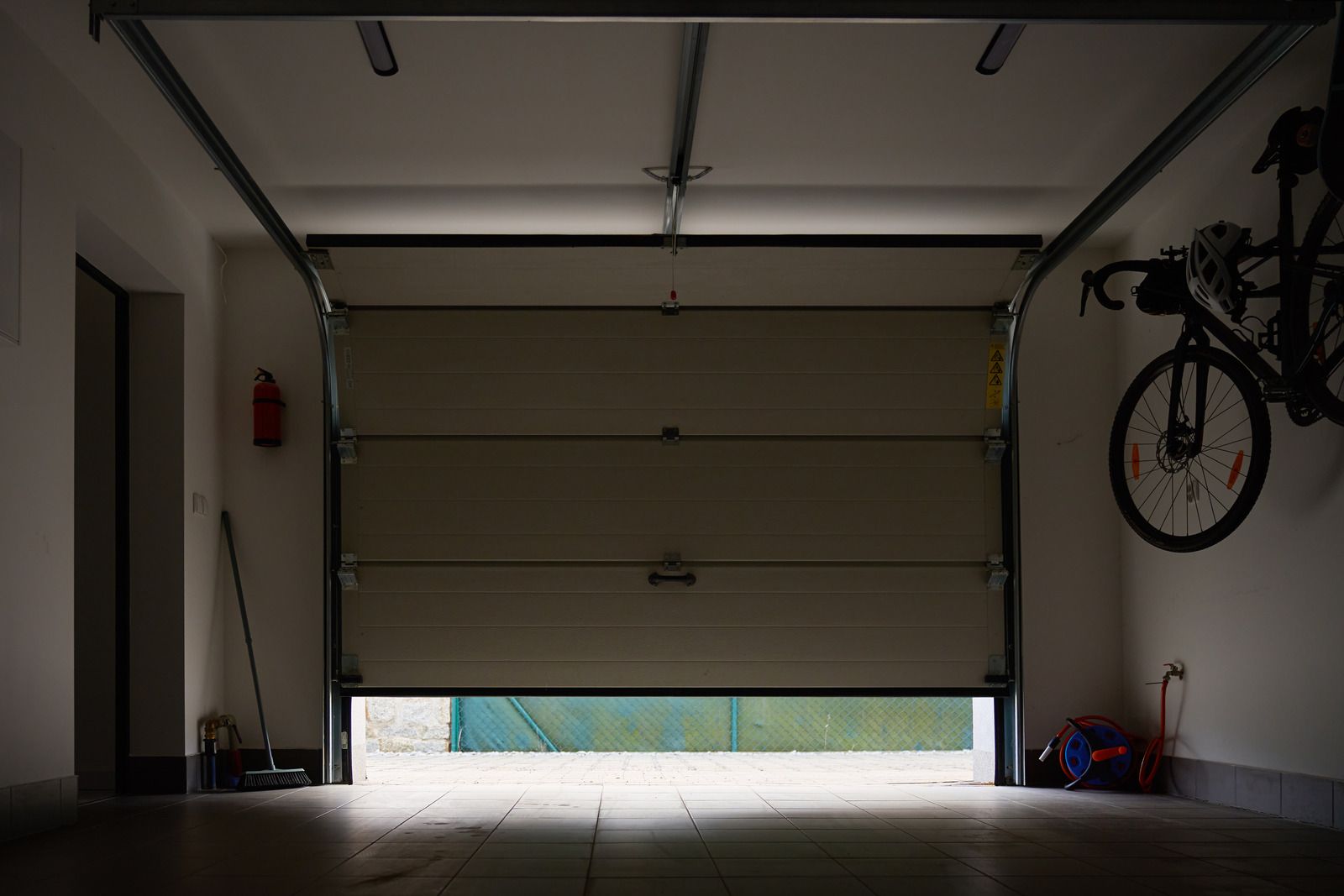
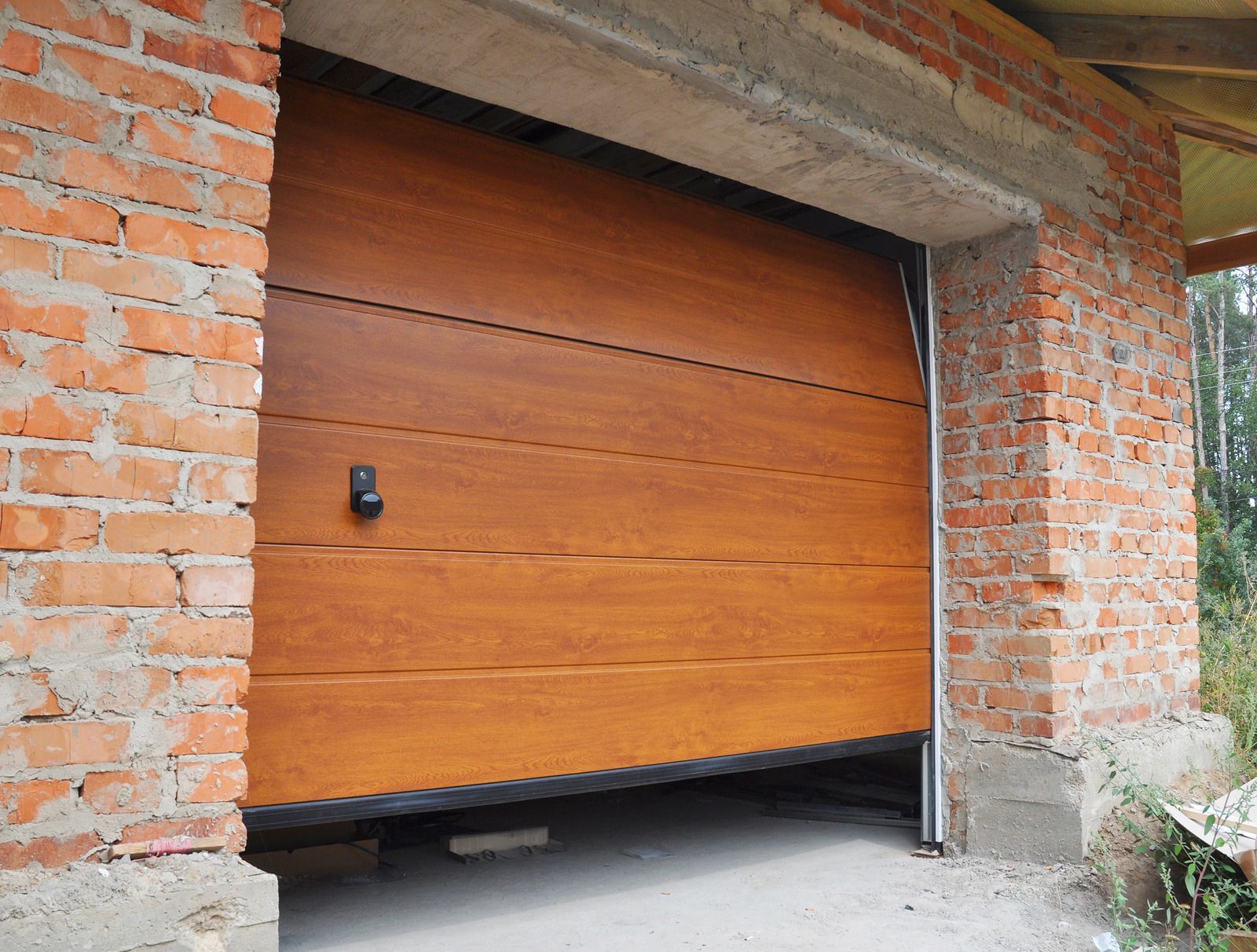
This is one of the most common winter culprits and, thankfully, one of the more manageable ones. The rubber strip along the bottom of the door, sometimes called the bottom seal or astragal, can freeze directly to the concrete or to a thin sheet of ice on the floor. When you hit the button, the opener tries to lift, senses the door being held down, and stops or reverses to protect itself.
How to spot it
Look at the line where the door meets the floor. If you see ice, packed snow, or a frozen puddle there, that seal is very likely stuck. Sometimes you will hear a slight cracking or peeling sound the moment the door finally breaks free.
What is safe to do
Clear snow and standing water away from the base of the door. If the seal is iced down, warm water poured along the bottom will melt it, but keep it warm rather than boiling, and wipe up the excess so it does not simply refreeze and trap the door again the next morning. A seal that keeps freezing down season after season is often worn flat and no longer sheds water the way it should, which is worth having looked at before the deep cold sets in.
When the Opener Is the One Struggling
Sometimes the door itself is fine and the opener is the weak link in the cold.
Weak batteries fade fast
Cold reduces battery efficiency. A remote or keypad battery that was marginal in the fall can quit entirely on a sub-zero morning. If the wall button works but the remote does not, a fresh battery is the first and easiest thing to rule out before looking at anything more involved.
Force and travel settings react to winter drag
Openers have settings controlling how much force the motor applies and how far the door travels, and these exist for safety. When the door meets more resistance than expected, from hardened grease, a stiff seal, or a binding roller, the opener assumes an obstruction and reverses. That is winter drag.
TIP: Before you call anyone, note the exact behavior. Does the door not move at all, move a few inches and stop, or start and then reverse? Does the opener hum, click, or stay silent? Did you hear a bang recently? Those details point straight at the likely cause, and passing them along when you reach out lets a technician arrive ready for the actual problem instead of guessing.
Adjusting the force settings might sound like a quick fix, but it is a trap. Those settings are the very safety feature that keeps the door from crushing whatever is beneath it. Turning up the force to overpower cold drag can let the door close on a person, a pet, or a car bumper. The right move is to find and fix the source of the drag first, then let the opener work the way it was designed to.
What You Can Safely Handle, and What You Should Not
Clearing snow and ice from the base and tracks, thawing a frozen bottom seal with warm water, replacing a weak remote battery, wiping the photo-eye lenses, and applying a proper garage door lubricant to rollers and hinges are all within reach for most homeowners. A light, weather-rated silicone-based lubricant is the right choice; heavy grease and general-purpose sprays only thicken further in the cold and make the drag worse.
Time to step back
A door that feels extremely heavy, a loud bang followed by a door that will not lift, a visible gap in a spring coil, a frayed or loose cable, a door that sits crooked or has jumped its track, or a door that still will not move after the simple checks are all signals to stop. Those involve high tension and heavy, awkward parts, and they are where winter garage door injuries happen. There is no shame in leaving them to someone with the training and tools; there is real risk in not.
Frequently Asked Questions
Why does my garage door only stick on the coldest mornings?
Because cold stacks several problems at once. Metal contracts and binds, grease hardens into drag, batteries weaken, and springs turn brittle. A door that coped fine in mild weather reaches its limit on the freeze.
Is it safe to keep pressing the opener button if the door won't move?
No. If a spring broke or something is binding, running the opener repeatedly strains the motor and worsens the damage. If you hear humming or straining with little movement, stop and have the door checked.
Can I pour hot water to free a door frozen to the ground?
Warm water, not boiling, poured along the bottom seal melts ice locking the door down. Wipe away the runoff so it does not refreeze and trap the door. A seal that keeps freezing is worn.
Why does my door start to open and then stop or reverse?
That is usually the opener sensing more resistance than expected, or safety sensors misaligned. Cold-hardened grease, a stiff seal, or a binding roller creates drag it reads as an obstruction. Wipe sensors, clear the base.
Should I adjust the opener's force setting to get through winter?
It is best not to. The force setting stops the door closing on a person or object, and raising it removes that protection. Instead, eliminate the source of the drag and let it run properly.
How can I tell whether it is a broken spring or just the cold?
A broken spring makes the door feel extremely heavy, often follows a loud bang, and may show a gap in the coil while the opener strains. A cold bind eases once you clear the ice.
Getting Your Door Moving Again Before the Next Freeze
A garage door that will not open in the cold is rarely one single failure. It is the freeze exposing whatever part of the system was already closest to its limit, whether that is a tired spring, hardened lubricant, a frozen seal, or a fading battery. The everyday steps of clearing ice, thawing the seal, wiping the sensors, and swapping a battery are safe and often enough. But the moment the door feels heavy, a spring looks or sounds like it has let go, or a cable is involved, the smart and safe response is to stop and bring in a professional, because those parts carry enough stored tension to hurt you.
Schedule a
winter garage door inspection or repair. Whether your door froze to the ground, the opener is straining against cold drag, or a spring gave out on a sub-zero morning, getting it diagnosed correctly means a door that lifts reliably all winter and a garage you can actually get into. Garage Door Services of Door County, LLC, based in Sturgeon Bay, Wisconsin, brings 9
years of owner-operated, warranty-backed experience and local Door County know-how to spring, opener, and cold-weather repairs, safely handling the high-tension parts that are never worth risking yourself. Reach out to get your door moving again before the next hard freeze.